Living With Motorized Shades in a Westfield Home, Day to Day
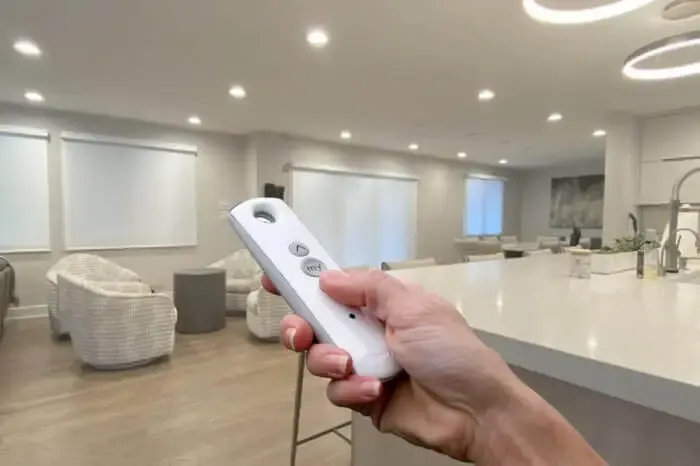
Motorized shades get sold on the remote and bought on the picture of a shade gliding down by itself. What nobody covers at the showroom is the part that decides whether you're still happy in year three: where the power comes from, what talks to what, and who changes the batteries. This walks through the actual systems behind motorized shades in a Westfield home, with the tradeoffs stated plainly instead of buried in a spec sheet.
Day one, and what the installer should leave behind
The install itself is the easy part. What determines whether you like the system a year later is the twenty minutes after the shades are up. Travel limits get set so every shade in a room stops at the same height. Each shade gets paired to a remote channel, and groups get built so a room moves together. If there's a hub, it gets on the network and the shades get names that mean something, like "kitchen sink" rather than "Shade 4."
Ask for two things before the truck leaves. A written list of which channel or group runs which shade, and a demonstration of how to reset travel limits yourself. Limits drift occasionally, usually after a battery change or when a shade hits something on the way down. Knowing the reset procedure turns a service call into two minutes of work.
What people actually complain about
Motors make noise. It's a low hum for a few seconds, not silence, and in a quiet bedroom at 6 a.m. you notice it. If that's a concern, keep the bedroom shade off the morning schedule or set it to run while you're already up.
Shades drift out of alignment. Two shades on the same group can end up stopping a half inch apart after a year, which is invisible until you see them side by side. That's a limit reset, not a defect.
Remotes disappear. Wall mounted remote holders solve this better than any app does. Keep a spare in a drawer, particularly for a proprietary system where a replacement takes a call to a dealer.
Apps change. A hub based system depends on a phone app that gets updated on somebody else's schedule. Nothing is wrong with that, but it's a reason to keep at least one physical remote or wall switch per room, so a lost network never means an unusable shade.
The seasonal rhythm
The schedule that works in July isn't the one that works in January. In summer you want the west and south shades down ahead of the afternoon, keeping sun off the glass before the room heats up. In winter you want the opposite on sunny days, letting low sun into the room and closing shades after dark to slow heat loss. A Westfield year hands you a real cooling season and a real heating season, so the same shade earns its keep twice. Two seasonal scenes handle that, and swapping between them takes a minute.
Set a reminder twice a year, when the clocks change, to switch scenes and check battery levels at the same time. Most Westfield homeowners who stay happy with motorization are the ones who treat it as a small seasonal habit rather than something that runs itself forever.
Decide the power method first, because everything else follows from it. Battery for a finished house, hardwired where walls are open or shades are high, and a hub only if you actually want schedules. Motorize the openings that annoy you and leave the rest alone. Westfield Window Treatments is insured and insured and will write the power method and control type into the scope for every opening. Call (317) 863-9966 to walk through it.
The battery routine nobody mentions
Battery powered shades are terrific and they carry a chore. Hunter Douglas publishes battery life of about a year for PowerView, and that's a reasonable planning number across the category, but the shade that runs twice a day on a schedule will get there faster than the one you nudge on weekends. Heavy blackout rollers work harder than small cellular shades. Cold rooms drain faster than warm ones, which matters in an Indiana winter if you've got a shade in a sunroom or over an unheated stairwell.
What that looks like in practice: a shade slows down, then it starts refusing to complete a full run, then it stops. Rechargeable wands unclip from the headrail and charge on a wall outlet over a period of hours, so plan on the shade being out of action for an evening. Alkaline packs swap out in a minute but cost money each time. A solar trickle charger clipped to the glass helps on a sunny exposure and does little on a shaded north wall.
The practical advice is to charge on a schedule instead of waiting for failure. Pick a month, do the whole house, write it on the calendar. Chasing them one at a time as they die is what makes people say they regret motorization.
Schedules and scenes
Once there's a hub, the system stops being a remote control and starts being a routine. Two features carry most of the value.
- Astronomical timing. The schedule follows actual sunrise and sunset for your date and location rather than a fixed clock time. That matters here, because a 6 p.m. rule that's perfect in October is an hour wrong in June.
- Scenes. A scene moves a group of shades to set positions at once. Most households end up with three or four that they actually use.
The scenes worth building are the ones tied to a real moment. A morning scene that opens the kitchen and living room partway. An afternoon scene that drops the west facing shades to a set height before the sun gets low, which is the one that protects a room from heat in a Westfield summer. An evening scene that closes the front of the house. An away setting that moves a few shades during the day so the house doesn't look static.
Sun sensors are a further step. They extend or lower a shade when light crosses a threshold. Some people love them and some people find a shade moving on its own irritating enough to switch the sensor off within a month. Start with schedules, add a sensor later if you still want it.
Frequently Asked Questions
How long do the batteries really last?
Hunter Douglas publishes about a year for PowerView, and that's a fair planning number across the category. Your mileage moves with use. A shade running twice daily on a schedule drains faster than one you touch on weekends, a wide blackout roller works harder than a small cellular shade, and cold rooms cut capacity. Rechargeable wands take hours to charge, not minutes. If you have a dozen battery shades, you're doing something about once a month.
Do I need a hub, or is a remote enough?
A remote is enough if you just want to press a button. It pairs directly to the shade over radio, needs no network, and keeps working during an outage. A hub adds schedules, phone control, voice and integration with other smart devices. It also adds a dependency on your network and on an app somebody else maintains. Start with the question of whether you want shades moving on a schedule. If not, skip the hub.
Can I add a motor to shades I already have?
Sometimes. Certain product lines are built so a motor can be retrofitted into the existing headrail or roller tube, and plenty of others aren't. Even when it's possible, the labor plus the motor often approaches the cost of a new motorized shade, so it's worth pricing both. If motorization is a maybe, price it at the time of the original order. That's much cheaper than deciding a year later.
What are travel limits and why do they matter?
They're the upper and lower stopping points programmed into each motor at install. They're what makes four shades on one wall stop at exactly the same height instead of a stair-step. Limits can shift after a battery change or if a shade hits an obstruction on the way down. Resetting them is usually a short procedure you can do yourself, so ask the installer to demonstrate it and to write down which channel runs which shade.
 When Stock Blinds Are the Right Call in a Westfield Home
 What Roller and Solar Shades Cost in Westfield Homes Today
 Cellular Shades in Westfield: Single Cell or Double Cell