Cellular Shades in Westfield: Single Cell or Double Cell
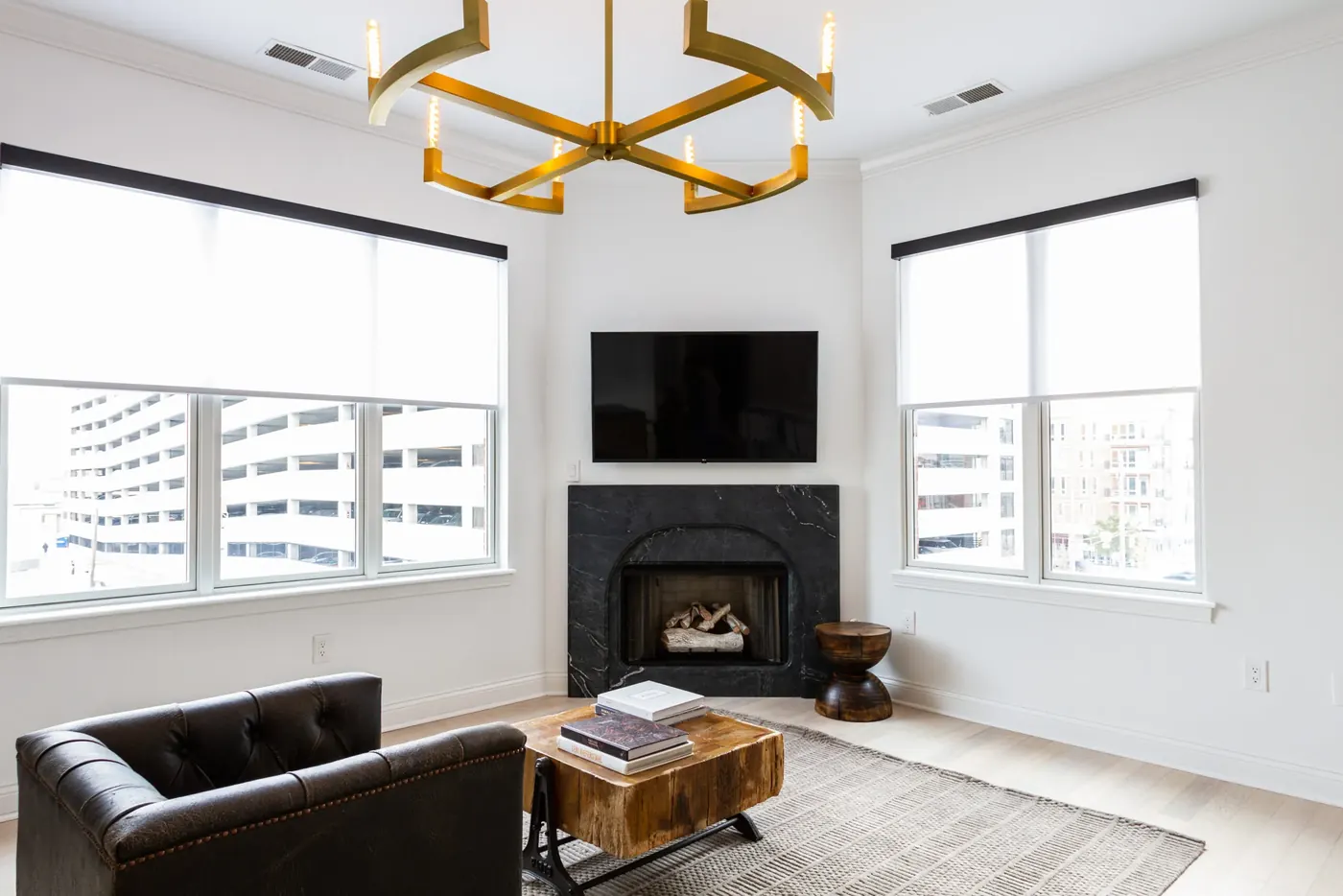
Cellular shades cover an enormous price spread. You can buy one off a rack for less than a tank of gas or spend many times that on a custom shade with two moving rails and a motor. Most of that spread is real, and a little of it isn't. This is where the money goes on a honeycomb shade, what the cheap version gives up, which upgrades earn their keep, and the ongoing cost that rarely comes up before the sale in Westfield homes.
What the cells actually do
A cellular shade is pleated fabric insured back on itself into rows of hollow tubes. Look at one from the side and you see the honeycomb, which is where the other name comes from. Those tubes aren't decoration. Each one holds a column of air that can't circulate, and still air is a poor conductor of heat.
Glass is the weak spot in any wall. In July, glass on the sun side gets hot and radiates into the room. In January the same glass runs cold and pulls warmth out of the room air touching it. A honeycomb shade puts trapped air in that path, so heat has to cross fabric, then dead air, then fabric again before it reaches you. It slows the exchange rather than stopping it.
The Department of Energy, citing testing at Oak Ridge National Laboratory, reports that cellular shades saved up to 20 percent of heating energy and up to 15 percent of total heating and cooling energy compared with a bare window. Those are ceiling numbers from controlled testing rather than a prediction about your house. What matters for a Westfield home is that this climate has a real cooling load and a real heating load, so the same shade works in both directions.
What they cost
Stock cellular shades run roughly $60 to $600 a window nationally. Custom shades measured in your Westfield home and installed run roughly $250 to $2,600 a window. Double cell, room darkening liners, top down bottom up, and side channels all move you up inside that band. If you motorize, battery powered motors run roughly $100 to $300 a window less than hardwired. Lead times are typically two to five weeks, so nothing about this happens the same week you decide.
Cellular shades work best when someone tells you the limits before you buy. There is a light gap on an inside mount. Double cell is thicker and stacks taller than single. Top down bottom up costs more and never fully clears the window. None of that's a reason to skip any of it. Westfield Window Treatments measures each opening and writes down what you will actually see. We are insured and insured. Call (317) 863-9966 to get started.
Opacity isn't the same decision
Cell count controls heat. Fabric opacity controls light, and the two get confused constantly. Light filtering fabric glows and gives daytime privacy without darkness. Room darkening fabric has an opaque liner insured inside the cell, so very little light passes through the face of the shade. You can order a double cell in light filtering or a single cell in room darkening. They are independent choices.
Here's the part worth hearing before you order. Room darkening fabric doesn't make a dark room by itself, because light comes around the shade rather than through it. The fabric can be fully opaque and the room will still have a bright outline. Anyone selling you a truly dark bedroom has to talk about the edges.
How cordless actually works
Cordless doesn't mean there's nothing inside. A spring motor in the headrail is tensioned to counterbalance the weight of the fabric, so wherever you leave the bottom rail, it stays. ANSI/WCMA A100.1-2022 is the product safety standard behind the shift, and it is why cordless operation is now standard on most stock lines rather than an upgrade. That standard describes the product, not the company that installs it.
Two things to know. Grab the bottom rail near its center. Pulling one corner racks the shade and it'll run crooked until you even it out. And springs relax over years, so an older cordless shade may start creeping down on its own. That is a tension adjustment inside the headrail, not a reason to buy a new shade. Very tall or heavy shades can exceed what a spring will hold, which is where a motor stops being a luxury.
Top down bottom up
A standard shade has one moving rail at the bottom. A top down bottom up shade has two, a middle rail that comes down from the headrail and a bottom rail that goes up from the sill, each on its own cord path. That gives you a band of covered glass you can put anywhere in the opening.
The use case is a window where you want daylight over your head and privacy at eye level. Street facing bedrooms are the classic one, along with bathrooms and any dining room that looks straight at a neighbor. People who have it tend to use it daily.
The trade offs are real. The shade never clears the opening completely, because when the top rail is lowered the fabric has to stack somewhere and that somewhere is the bottom. There is more hardware and more cost. The middle rail puts a visible horizontal line across the window. On a very wide shade the two rails can rack out of level if somebody yanks one corner, and getting them back square takes a minute of even pulling.
Single cell or double cell
A single cell shade has one row of tubes. A double cell has two rows front to back, which puts two air pockets in series between the room and the glass. Double cell slows heat movement more. It also costs more and sits thicker front to back, and it stacks taller at the top of the window when raised.
Cell size is a separate spec. Common sizes are 3/8 inch, 1/2 inch, 9/16 inch, and 3/4 inch. Smaller cells look finer and stack tighter, which suits small openings. Larger cells cover a tall window with fewer pleats and give a bigger air pocket per cell. On a short window a 3/4 inch cell can look coarse. On a tall stairwell window a 3/8 inch cell looks like corduroy.
Double cell earns its price on the windows that hurt. Think of a west facing wall in the afternoon, a bonus room over a garage, a big north window in a room that never warms up, or the one corner of a Westfield house that always feels drafty. On an interior hallway window or a small bath, single cell is plenty.
The light gap on an inside mount
An inside mount sits the shade inside the window opening, which looks clean and shows off the trim. It also guarantees a light gap. The factory takes a deduction off your measured width so the shade will fit and run without rubbing, and that deduction becomes a bright line down each side in the morning.
Published numbers give you the shape of it. One major manufacturer lists a standard factory deduction of 1/16 inch per side and inside mount light gaps as large as 3/4 inch per side on certain roller systems. Cellular runs tighter than that because the fabric spans nearly the whole headrail, but there's still a gap and you will see it. Gaps grow on big shades too. That same manufacturer notes larger gaps on shades 120 inches and taller, or with a height to width ratio near four to one.
Dealing with it early is cheaper than fixing it later. You can mount outside the opening with two to three inches of overlap per side. You can add side channels, which are light blocking pockets that the shade edges run inside. A drapery panel layered over the shade does the same job with fabric. Mounting depth decides part of this for you, since an inside mount needs enough flat depth to hold the headrail.
Frequently Asked Questions
Is double cell worth the extra money?
On some windows, yes. Double cell puts two pockets of trapped air between the room and the glass instead of one, so it slows heat movement more. Save it for the openings that actually hurt, which usually means a west facing wall that takes afternoon sun, a room over a garage, or a big window in a room that never feels comfortable. On an interior hallway or a small bath, single cell does the same visual job for less. Double cell is also thicker and stacks taller when raised.
How much light comes in around an inside mount shade?
Enough to notice on a sunny morning. The factory takes a deduction off your measured width so the shade fits and runs freely, and that deduction shows up as a bright line down each side. One major manufacturer publishes a standard deduction of 1/16 inch per side and inside mount gaps as large as 3/4 inch per side on some roller systems. Cellular runs tighter, but the gap exists. The fixes are side channels, an outside mount with two to three inches of overlap per side, a drapery layer over the top, or deciding you can live with it.
What is top down bottom up actually good for?
It gives you a movable band of coverage instead of a shade that only comes up from the bottom. The everyday use is dropping the top rail a foot or two so daylight comes in above eye level while the lower part of the window stays covered. Street facing bedrooms are the classic case, along with bathrooms and any dining room that looks straight at a neighbor. The trades are cost, a visible middle rail, more hardware to go wrong, and the fact that the shade never fully clears the opening.
Do cordless shades wear out?
They age rather than fail. A cordless shade uses a spring motor in the headrail tensioned to hold the weight of the fabric, and springs relax over years. The symptom is a shade that slowly creeps down after you set it. That's usually a tension adjustment inside the headrail rather than a replacement. The other common issue is racking, where the shade runs crooked because it has been lifted by one corner. Pull the bottom rail near the center and it stays square.
 When Stock Blinds Are the Right Call in a Westfield Home
 What Roller and Solar Shades Cost in Westfield Homes Today
 A Room by Room Window Treatment Guide for Westfield Homes