Exterior Solar Shades

Westfield Exterior Solar Shades

Stops the load outside, where it still can be stopped

Call (317) 863-9966Get Free Quote
Quick Answer

Answers here cover the whole lifecycle: measuring, ordering, fabrication, installation, care and service. A custom window covering is a long-term purchase and the later stages deserve as much attention as the first.

  • Service: Exterior Solar Shades for Westfield homeowners
  • Service area: Westfield, IN and surrounding areas
  • The measure gets scheduled quickly. The build does not, because your fabric or shutter panel is cut to your numbers after you order. Two to five weeks is normal. Service calls skip that step entirely.
  • Insured and bonded
  • Serving Westfield, IN since 2008
Exterior Solar Shades Services

Expert Exterior Solar Shades for Westfield Homes

Everything hung inside a window works on energy that's already in the room. An exterior shade works on it before it arrives, which is a different physical proposition and produces a different result. On a Westfield rear elevation facing west across open ground with no canopy anywhere, that difference is the whole argument. Interior solar fabric fixes the glare. An exterior screen or roller shade fixes the temperature, and on a covered porch it turns a space nobody uses after four o'clock into one that gets used.

The stock here suits it. Post-2015 Westfield plans regularly carry a covered rear porch, a screened outdoor living area or a patio structure, and those are exactly the locations exterior shades belong: a structure to mount to, a defined bay to fill, and a west or south aspect that makes the space unusable in July. Fitting exterior product to bare wall above unprotected glass is possible and it's a harder detail with more exposure on the hardware.

Two things need saying before anybody orders. Materials are outdoor rated for a reason and outdoor UV exposure is the whole life story: mesh chalks over years and hardware weathers, so this is a product with a service life rather than an indefinite one. And in Westfield, exterior work touches the association question directly. Roughly 170 approved Planned Unit Developments are on the city's register, so almost every address sits inside one, and exterior product is exactly the category an architectural committee and the PUD ordinance are likely to have views on. Get the approval before the order, not after.

When to Call

Signs You Need Exterior Solar Shades

If you notice any of these in your Westfield home, it is worth booking a measure. None of it is urgent, and none of it fixes itself either.

A covered porch is unusable from mid afternoon

Interior shades handle the glare but not the heat

West glass faces open ground with nothing between

An outdoor living space needs shade and airflow

The patio furniture is fading faster than it should

The room behind the porch heats up regardless of shades

Wind blows through an open outdoor room constantly

An outdoor television washes out every afternoon

Our Process

How Westfield Window Treatments Handles Exterior Solar Shades

Every job follows the same six-step process. Transparent, thorough, and done right the first time.

1

Confirm the load is thermal

If the complaint is glare on a screen, an interior solar shade is cheaper and does it. If the complaint is that the space or the room behind it is genuinely hot, that's a thermal load and it has to be stopped outside. We ask the question directly, because exterior product is a bigger investment and it should be bought for the right reason.

2

Assess the structure

Exterior shades need something substantial to mount to and something to guide against at the bottom. A covered porch with posts and a beam is ideal. A bare wall above glass is workable and harder. We check what's actually there, including whether the framing behind a finished porch ceiling can carry the load, before designing anything.

3

Handle the association first

With roughly 170 PUDs on the city register, nearly every Westfield address has an association and exterior work is the category most likely to need approval. We tell you plainly what the submittal will probably need, and the order waits until you have an answer. Nobody wants product on a truck while a committee is meeting.

4

Select mesh and openness

Exterior mesh comes in stated openness factors like interior solar fabric, and the trade is identical: lower openness means more shade and less view. Outdoors, a slightly higher openness usually works because the shade is stopping the energy before the glass rather than after, so you can keep more view for the same comfort result.

5

Specify guides and wind behavior

An exterior shade in an open bay moves in wind unless it's guided. Side channels, cable guides or a weighted hembar all address it to different degrees, and the right answer depends on how exposed the bay is. On a west elevation with open fetch across a fairway or open ground, this gets specified properly rather than hoped for.

6

Install and set the routine

Brackets into structure, guides plumb, full travel run, and where motorized, limits set and a wind strategy agreed. Then the maintenance conversation: mesh gets rinsed rather than scrubbed, the shade goes up in high wind unless it's rated and guided for it, and both mesh and hardware are consumables on a long timescale rather than permanent fittings.

Real Project Photos

Exterior Solar Shades in Westfield

Photographs from real exterior solar shades jobs completed by our crew in Westfield and surrounding areas.
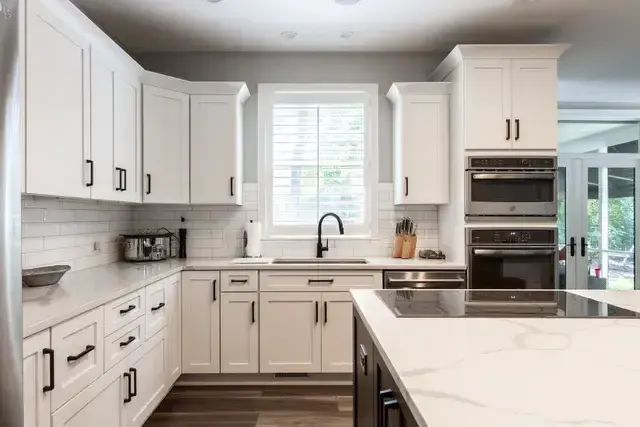
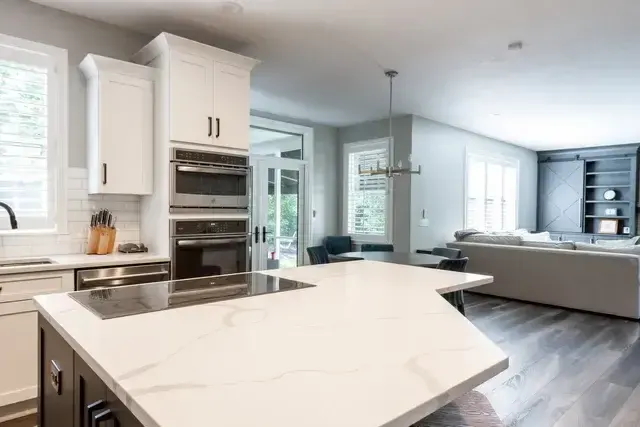
Custom shades measured and installed in WestfieldPlantation shutters fitted to a Westfield windowCellular shades in a Westfield living room
Scope of Work

What Exterior Solar Shades Includes

Every Westfield job is documented item by item. Here is what the crew covers.

The sun walked on site at the hour the space actually gets hot, rather than whenever the appointment happens to be

Elevation identified per unit, since a west wall and a south wall want different openness and a different drop

Drop dimensioned from the mounting height down to where you want the mesh to land, at a rail or at the deck

Width run past the opening far enough that low afternoon sun can't come in around the side

Real structure located behind the finish, because an exterior shade anchors to framing or a beam and never to trim

Fastener schedule matched to the substrate, with brick veneer anchored through to the structure behind it

Openness factor chosen against view and heat, 1, 3, 5 or 10 percent, with samples held up outdoors in daylight

Mesh color decided knowing a dark mesh sees out better while a light mesh reflects more and glares more

Guide system specified as zip track or cable, since a free-hanging hembar is where an exterior shade fails

A hood or cassette specified so the rolled mesh isn't sitting out in weather all winter

Wind exposure assessed at that corner of the house, including which direction gusts actually arrive from

A wind sensor specified on any motorized unit that will be left down while nobody is home

Power route planned before the order, with any hardwiring done by a licensed electrical contractor

Battery operation weighed against an Indiana January, since cold shortens what a battery will deliver

Clearances checked for door swing, steps, a grill and anything else living under the shade

Every fastener into the wall sealed properly so nothing we add becomes a path for water

HOA rules on color, projection and visible hardware checked in writing before an order goes in

Travel limits set on install day, the unit cycled fully, and the retract routine shown to whoever will use it

Pricing

What Exterior Solar Shades Cost in Westfield

There's no single published national figure for exterior screens, so the honest way to frame it is against two that do exist: motorized shades run about $300 to $1,500 per window installed, and retractable awnings run about $1,000 to $6,000 installed. Exterior solar shades sit between those, and they aren't a quote for anything in Westfield. Size drives it first, because these get large. Then the guide system: a shade hanging free with a weighted hembar is the cheap version, and a zip track that captures both edges costs more and is the one that survives a windy season. Motor, hood and the power run finish the number. Westfield Window Treatments prices after seeing the structure in Hamilton County, not from a picture.

By Product

How Exterior Solar Shades Differ by Product

Every product in this trade behaves differently in a room. Here is what that means for this work.

1 percent openness mesh: The tightest weave we hang outdoors. It cuts the most heat and glare and gives up the most view, and it makes sense on a west wall where afternoon sun is the entire complaint and looking out is secondary.

3 percent openness mesh: The workhorse specification for a patio or a porch. It holds back a serious amount of solar energy while keeping a usable view outward during daylight, and it's where most projects land once people see samples held up outside.

5 and 10 percent openness mesh: Looser weaves that protect the view first and the heat second. They belong where the outlook matters more than the temperature, or on an elevation that only takes hard sun for an hour or two a day.

Zip track guides: Tracks down both sides hold a welded edge on the mesh so the fabric can't leave the channel. It's the difference between a shade that shrugs off a gusty afternoon and one that flaps, stretches and eventually tears out at the hem.

Cable guides: Stainless cables tensioned top to bottom pass through the hembar and keep it from swinging. Cheaper than zip track and less capable in wind, and a reasonable middle answer on a sheltered porch that doesn't catch much weather.

Hood over the roller: An aluminum cover enclosing the rolled mesh when the shade is up. Out here it's not cosmetic. It keeps sun, rain and grit off the fabric roll and the mechanism through the months the shade isn't being used at all.

Manual gear operation: A crank and gearbox that runs the shade up and down by hand. It's dependable, it needs no power, and its weakness is human: a manual shade only retracts before a storm if somebody is home and thinking about it.

Motor with a wind sensor: The motor runs the shade on a remote and the sensor retracts it automatically once wind crosses a set threshold. On an exterior unit this isn't a luxury feature. It's the thing that saves the shade on the afternoon nobody is watching the sky.

Hardwired power supply: A dedicated circuit or a low-voltage feed run to the motor and installed by a licensed electrical contractor. Outdoors it beats batteries most of the time, since a hardwired motor doesn't care what the temperature did in January.

Post or beam mounting: Where there's no wall, the shade hangs from a beam or between posts on an open patio. The engineering question moves from the fastener to the post itself, and a post that wasn't set for lateral load will tell you about it in a gust.

Light Control

See What Each Fabric Does To The Light

Pick a fabric below and the window updates. It's a drawing rather than a photograph, so read it as a rough guide to what each family does in a Westfield room, and to what it doesn't do.

Fabric type

Sheer, 10 percent openness

Ten percent of the weave is open, so you keep the view and most of the daylight. Glare drops a little. After dark, once your lamps are on, someone outside can read shapes through it, which is why this belongs on a view window rather than a bedroom.

Openness factor is printed on the fabric card, so you can compare one line against another before you order anything.

Keeps the viewNot private after dark

Solar, 5 percent openness

The usual pick for a west window or a covered porch. You can still read the yard through it, glare comes down noticeably, and the fabric intercepts a good share of the sun before it reaches you at four in the afternoon.

It also cuts the UV landing on floors and furniture. NFRC puts UV at roughly 40 to 60 percent of fading damage, so this slows fading rather than stopping it.

View and glare controlSlows fading

Solar, 3 percent openness

A tighter weave. The room goes dimmer and the view drops back to an outline. Choose it where the sun is the problem and the view is second, which around here usually means a west wall in July. That's a common call on this side of Indianapolis.

Openness affects how much you see out, not how private you are. A 3 percent fabric still shows silhouettes at night.

View becomes an outlineStrong glare control

Solar, 1 percent openness

Close to a solid fabric with a little view left in it. This is the strongest glare control in the solar family.

The trade is that it darkens the room on a gray January day too. Indianapolis averages a January high near 36F and the light is flat, so think about how the room reads in both seasons before you commit.

Darkest solar optionDim on gray days

Light filtering

No view through it. Daylight comes through the face diffused, so the room stays bright without a hot spot across the television or the kitchen island. This is the default for living spaces.

It isn't private in reverse at night. With the lamps on and the sun down, silhouettes still show.

No view through itBright without the glare

Room darkening

A denser fabric, usually with a liner behind it. Most of the light coming through the face is gone.

Light still arrives around the edges on an inside mount, so a room darkening shade gives you a dim room rather than a dark one. If someone in the house sleeps during the day, say so at the measure and we'll scope it differently.

Dim, not darkEdges stay bright

Blackout

The fabric itself passes essentially no light. What you'll still see is the perimeter. Lutron publishes an inside-mount light gap of about 3/4 inch per side on its Roller 20 and 64 shades, along with a standard factory deduction of 1/16 inch per side, and shades over 120 inches tall or past a 4:1 height-to-width ratio get larger gaps than that.

So if you need a genuinely dark bedroom, that gap has to be dealt with on purpose, either with side channels or by going outside mount. We tell you which one your opening can carry while we're still standing in the room.

Dark facePerimeter needs a plan

Openness factor is a measured fabric spec, so you can compare it line to line. The category names are not measured. One maker's room darkening can behave like another maker's light filtering, which is why the sample books come to the measure and get opened in the room they're going in, at the hour that room has the problem.

Common Questions

Exterior Solar Shades FAQ

Questions we hear most often from Westfield homeowners considering exterior solar shades.

For temperature, substantially, because it intercepts solar energy before it passes the glass rather than after. Once energy is inside the room, an interior fabric can reflect some back out but most of it stays. For glare, an interior shade does the job at a fraction of the cost. So the honest framing is that these two products solve different halves of the same complaint. On a west facing Westfield room with nothing shading it, plenty of houses end up with an exterior shade over the porch and interior solar fabric on the glass. The two also work together rather than competing, because an exterior shade that cuts the load lets you choose a higher openness inside and keep more of the view.
It's built for outdoor exposure and it isn't permanent. Exterior mesh is rated for outdoor ultraviolet exposure, and over years it chalks and the hardware weathers. Wind is the bigger factor: an unguided shade in an open bay moves and that movement wears the mechanism and the fabric edges. Side channels, cable guides or a weighted hembar reduce it. On an exposed west elevation with open fetch across a fairway, the shade wants to go up in high wind unless it's specifically rated and guided to stay down. Retracting the shade when the space isn't in use is the single biggest factor in how long it lasts, and it costs nothing but the habit.
Very probably. Westfield's planning department lists roughly 170 approved Planned Unit Developments, so almost every address in the city sits inside a named PUD with an association attached, and exterior work is governed by the PUD ordinance as well as by any covenants. Exterior shades change how the house looks from outside, which is precisely what an architectural committee reviews. We'll tell you what a submittal typically needs and hold the order until you have an answer, because product on a truck during a committee meeting helps nobody. It's also worth asking the association about the color and the hardware finish rather than just the product, since those are frequently what a committee actually comments on.
Usually a little higher than you'd choose for the same view indoors. Because the shade is stopping energy before it reaches the glass, you get a better comfort result per unit of view lost, so a 5 or 10 percent mesh outdoors often achieves what a 1 or 3 percent would have to do indoors. On a porch where the whole point is sitting outside and looking at something, that's a meaningful difference. Where the shade is enclosing an outdoor room for privacy as well, lower openness makes sense. Where the porch is used in the evening, a lower openness also buys privacy from a neighboring yard, so the choice isn't only about sun.
They can turn an open porch into a usable shaded room, and they aren't a wall. Shades running the full bay with side guides cut sun, reduce wind and give a lot of privacy, and the mesh still breathes so the space doesn't become an oven. What they don't do is seal against rain driving at an angle or against insects. If insects are the requirement, that's a screening job rather than a shading one, and the two products are sometimes combined on the same structure. Combining a shade with an insect screen on the same structure needs planning at the design stage, because two tracks on one post is not something to improvise later.
On anything large, yes. Exterior shades are heavier than interior ones, they're often above head height, and they need moving with the weather rather than on a schedule, so a manual crank across a wide bay becomes something nobody does. Motorization with a wall control or remote makes the shade get used. Power is the planning item: an exterior location makes battery changes awkward, so a hardwired low voltage supply or a solar charging arrangement is usually the better answer outdoors than a battery wand. A wind sensor is worth adding on an exterior installation too, since a shade left down in a gust is how the guides and the fabric edges get damaged.
Rinse it and don't scrub it. A hose at gentle pressure with the shade down, allowed to dry fully before rolling up, is the routine, and it wants doing more often than an interior shade because outdoor mesh collects pollen, dust and whatever comes off open ground. Scrubbing distorts the weave and pressure washing damages it outright. Rolling up a wet shade is the mistake that causes marks and odor, so the drying step matters as much as the rinsing. Letting it dry fully before rolling it up matters more outdoors than indoors, because a wet exterior mesh rolled up will hold that moisture against itself for days.
Yes, and that's frequently the strongest argument for one. If a covered porch sits between the sun and a great room's glass, shading the porch reduces what reaches the glass in the first place, so the room behind gets cooler along with the porch. On newer Westfield plans where a covered outdoor living area sits directly outside a wall of rear glass, one exterior shade can do more for the room's afternoon temperature than several interior treatments would, because it's working on the right side of the glass. The best result usually comes from shading the glass rather than just the paving, so we look at where the shadow lands at the hour the room actually overheats.
Because of where the energy stops. Sunlight that reaches the glass is already inside the building envelope, and an interior shade can only absorb it and re-radiate some of it back into the room. An exterior screen intercepts that energy before it ever touches the glass, so the heat never enters. It's the only product in this trade that works on the outside of the window, and on a west-facing Westfield patio in July it's the difference between a space you use and one you look at.
It's a trade between view and heat, and there's no free option. A 1 percent mesh blocks the most and shows you the least. A 10 percent keeps your outlook nearly intact and does correspondingly less work on the sun. Most patios land at 3 percent, which holds back a lot of solar energy while leaving a usable view outward during daylight. We bring samples and hold them up outdoors, because a mesh judged indoors under a bulb tells you almost nothing about how it behaves in real sun.
More than the openness number in some ways. A dark mesh absorbs light instead of scattering it, so you see out through it far more clearly and the glare is lower. A light mesh reflects more solar energy away, which helps the temperature, but it scatters light into your eyes and the view through it goes milky. Most people who want to sit out and look at the yard end up on a dark mesh, and accept a slightly warmer number in exchange for actually seeing something.
Structure, and only structure. An exterior screen catches wind across a large area and transfers that load straight into its mounting, so fastening it to trim or to the face of a brick veneer alone is a failure waiting for the right afternoon. We find framing, a header or a beam, and where the wall is masonry we use anchors that reach what's behind the veneer. On an open patio it mounts to posts or a beam, and then the post itself becomes the thing we have to be honest about.
Wind is how exterior shades die, and every decision on the job comes back to it. A free-hanging shade with a weighted hembar will lift, flap and eventually tear at the hem or pull a bracket. A cable-guided shade holds better. A zip track holds the fabric edge in a channel and does best of all. None of them is a storm structure. The other half of the answer is a wind sensor on a motorized unit, since the shade only retracts in time if something is watching when you're not.
On any shade that will spend real time down, yes. The track captures a welded edge on the mesh so the fabric physically cannot leave the channel, which kills the flapping that destroys exterior fabric and takes brackets with it. It also seals the sides, so low sun stops coming in around the edge. On a small, sheltered porch screen that gets used occasionally, cable guides are a reasonable saving. On a west elevation, spend the money.
Down while you're using the space, yes. Down and forgotten for months, no. Exterior fabric handles UV by design, but a shade left extended through every storm of a central Indiana summer is taking loads it wasn't built for, and the mechanism ages faster in weather than it does rolled up in a hood. The practical routine is down through the hot part of the day and up when you go in. A motor with a timer or a sun sensor makes that happen without anyone remembering.
No, and this is where expectations need setting. A solar mesh is a screen with a stated openness, which means it has holes in it on purpose, and rain goes through them. It also isn't pitched to shed water the way an awning is. If you want a dry patio you want an awning or a fixed cover. If you want a cool one, you want this. Plenty of houses end up with an awning on one elevation and screens on another, doing two different jobs.
It isn't. The mesh is woven for solar performance, not for insect exclusion, and even a tight 1 percent weave isn't built or sealed the way an insect screen is. It does cut down what drifts in when it's fully lowered with zip tracks on both sides, which people notice and appreciate, but we're not going to sell it as a bug solution. If mosquitoes are the actual complaint, that's a screening conversation and a different product.
For a motorized unit, yes, one way or another. A hardwired motor needs a circuit, and that work gets done by a licensed electrical contractor rather than by us with a spool of wire. Some units run on a low-voltage supply, which simplifies the run. Battery motors avoid the electrical work entirely and bring their own trade-offs outdoors. Manual gear operation needs no power at all and is still a legitimate answer on a shade you can reach easily.
They work, and they deliver less than they do indoors. Cold reduces what any battery gives you, and an exterior unit sits in whatever January does, with January average lows around 20.9F here. Hunter Douglas puts PowerView battery life at about a year in normal indoor use, and outdoors you should plan on the shorter end of your product's rating. That's why we usually push toward hardwired power on exterior work, even though it means bringing in an electrical contractor.
Not usually, if it has a hood. A hood or cassette encloses the rolled mesh so it sits out of the weather from October to April, which is what that component is for. What we do recommend is a full retraction, a look at the brackets and a clean before the season ends. On an open-roller unit with no cover, taking the fabric off for winter is worth considering, and we'll say so at the measure rather than after the first hard freeze.
Hose it down and let it dry fully before rolling it up. Central Indiana gives you pollen in spring and dust all summer, and both sit in the weave and dull the view long before the fabric itself is worn out. Mild soap and a soft brush handle anything the hose won't. What matters most is the drying: rolling a wet mesh into a hood and leaving it for a week is how mildew starts on fabric that would otherwise have lasted years.
Yes, with the clearances drawn first. We check the door swing, the step below and the head height, then set the mounting so the hembar lands where it won't catch anyone walking through. On a sliding door the usual answer is a zip-tracked screen that runs to the deck, which you raise when you want to pass through. What doesn't work is a shade that has to be dodged, because a shade people duck under gets left up permanently.
Areas We Serve

Exterior Solar Shades Across Westfield

We measure and install in every one of these Westfield neighborhoods. Each has its own page with the build eras, window conditions and mounting notes for that section.

Free In-Home Measure

Schedule Your Free In-Home Measure in Westfield

Contact Information

Reach Us Directly

Our team prioritizes scheduled measures and service calls, and books in-home measures during business hours.

Office
1417 Commerce Avenue, Indianapolis, IN 46201
Hours
Mon-Fri 8a-6p
Service Area
Westfield, IN and Surrounding Areas

Ready to Book Your Measure?

Call us to set up an in-home measure, or to ask about a treatment that has stopped working. We will talk it through on the phone first.

Service area

Serving Westfield and the surrounding area

Call NowGet Quote