Skylight Shades Throughout Westfield
Tensioned channels overhead, because gravity doesn't help up there
Read these before you choose a fabric. Material, mount and lift decisions constrain what fabrics make sense, and working in that order avoids falling for something that won't work in the room.
- Service: Skylight Shades for Westfield homeowners
- Service area: Westfield, IN and surrounding areas It depends what's broken. Hardware repairs on existing blinds and shades usually come together quickly. Replacing an entire custom product means starting the fabrication clock again, which is two to five weeks in most cases.
- Insured and bonded
- Serving Westfield, IN since 2008
Expert Skylight Shades for Westfield Homes
Overhead glass turns up in Westfield where ceilings are tall and the plan is generous, and Chatham Hills is the clearest case. All 598 parcels there carry at least 2,487 square feet of recorded floor area and the largest runs to 15,902, with 445 of them recorded at two stories. Sun rooms and vaulted great rooms in that stock frequently take glass overhead as well as in the wall. The county parcel record doesn't flag skylights, so we count them at the measure rather than assume a number, and the tract was farm and golf ground until 2016, so nothing outside intercepts what comes through.
A skylight shade is the hardest thing on this list to get right, because the glass is overhead and gravity works against the fabric. A shade hanging in a wall stays where it's put. A shade on a sloped or horizontal opening has to be held in tensioned side channels along both edges, or it sags away from the glass and daylight comes around it. Nobody reaches these by hand either, so the shade is motorized by default and the power arrangement becomes a live question, because getting to a motor above a stair hall once a year is the part people don't cost.
Signs You Need Skylight Shades
If you notice any of these in your Westfield home, it is worth booking a measure. None of it is urgent, and none of it fixes itself either.
The room under the vault runs hot all July
A tube unit has nothing on it and no obvious option
Two skylights in one room behave nothing alike
Old channels are still up there, the fabric is gone
Standing under that glass feels cold in January
A skylight bakes the room every afternoon
A hard band of light lands on the artwork at noon
A new build left every skylight bare
The shade quit halfway down and stayed there
Glare lands on a screen you can't move
How Westfield Window Treatments Handles Skylight Shades
Every job follows the same five-step process. Transparent, thorough, and done right the first time.
In-home measure booked
Power method decided
Written scope and total price
Travel limits set and re-checked
Automation grouped with the room
Skylight Shades in Westfield
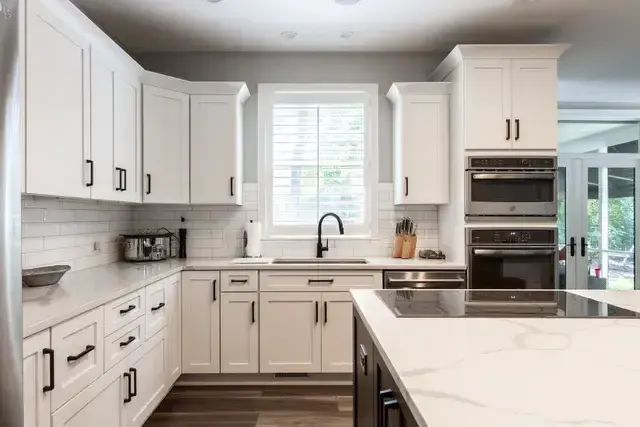
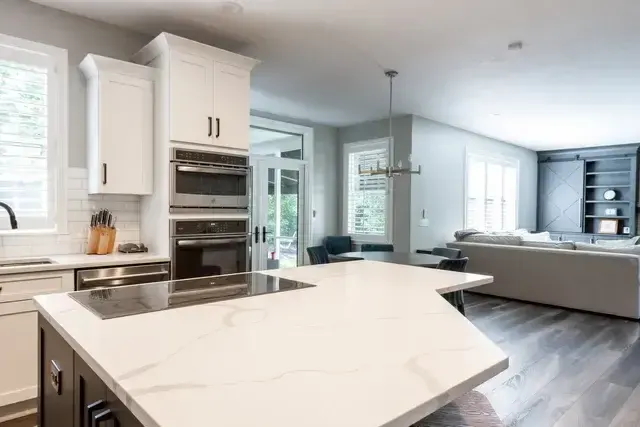
Photographs from real skylight shades jobs completed by our crew in Westfield and surrounding areas.
What Skylight Shades Includes
Every Westfield job is documented item by item. Here is what the crew covers.
Every unit measured at the glass frame itself, since the finished shaft below it is usually wider and often flared outward
Slope of the glass recorded, because a shade on a pitched plane has to be held against gravity rather than hung from a rail
Tensioned side channels specified on anything that isn't vertical, so the fabric can't belly away from the glass in the middle
Reach assessed out loud at the measure: what a pole can work, what needs a ladder, what nobody should be climbing to at all
Power method settled before the fabric is chosen, because a dead battery over a stairwell is a different problem than one at eye level
Rechargeable wands, trickle charge points and solar charging panels priced into the job rather than mentioned afterward
Battery interval written next to the height of the opening, since Hunter Douglas puts PowerView life at about one year
Low-voltage locations marked for a licensed electrical contractor wherever a hardwired motor is the sane answer
Fabric picked for what the opening actually does wrong, whether that's July glare on a screen or a bedroom lit at sunrise
Cellular fabric considered where the opening bleeds heat in January, with clearance held off the cold glass above it
Shape templated on site for a trapezoid, a triangle or any angled unit that isn't a plain rectangle
Channel finish and fabric color judged from the floor, since the underside is the only face of this shade you will ever see
Radio path tested from where you'll stand to where the motor will sit, because a deep shaft and foil-faced insulation both cut range
Travel limits set top and bottom, then re-checked on a return visit once the fabric has relaxed
A written plan for how the unit comes down again for service, cleaning or a battery change
Debris sitting in the light well pointed out before install, since a shade hides that and doesn't remove it
Written contract with scope, dates and total price, as IC 24-5-11 requires on residential work over $150
Every unit run full travel from the floor with the remote in your hand before the ladder leaves the room
What Skylight Shades Cost in Westfield
Published national ranges put custom-fabricated shades at roughly $250 to $2,600 a window and motorized window coverings at roughly $300 to $1,500 per window installed. Those are national category figures, not a quote for an address in Westfield. Overhead units sit high in both bands and there are honest reasons why. The fabric runs inside tensioned side channels instead of hanging free. The shape is frequently not a rectangle, so somebody builds a template. Almost every unit is motorized, because nobody wants a pole in the family room, and the motor then needs a charging plan that a wall outlet six feet away would have solved. Access is the last multiplier: the install happens off a ladder or a lift. Westfield Window Treatments prices these from the measured frame in Hamilton County, with the power method decided before the number is written.
How Skylight Shades Differ by Product
Every product in this trade behaves differently in a room. Here is what that means for this work.
Tensioned side channel track: Aluminum channels fixed to each side of the frame with the fabric held under tension between them. On sloped or horizontal glass this isn't a light-blocking upgrade, it's the thing that stops the fabric from sagging away from the glass.
Cellular skylight fabric: A honeycomb fabric on an overhead track, which is what people specify when the opening is losing heat in the coldest weeks. DOE and ORNL measured up to 20 percent heating energy savings for cellular shades against a bare window.
Solar screen fabric overhead: An open weave rated by openness factor, sized to cut glare while you can still tell it's daylight up there. It's the right call over a kitchen or a stairwell where the complaint is brightness rather than heat or privacy.
Room darkening skylight fabric: An opaque face inside channels, which is as dark as an overhead opening gets. The channels close the side light, and the honest limit is the head and hem, where a small amount still finds its way around the fabric.
Rechargeable battery wand: A wand of cells that slides out of the headrail for charging. On a reachable unit that's a twenty minute job once a year. On an unreachable one, plan the charging point at the order stage rather than discovering it later.
Solar charging panel: A small panel mounted where it actually sees sky, wired to trickle charge the battery wand. Over glass that gets real sun this is the arrangement that keeps a hard-to-reach unit running without anybody hauling a ladder around.
Hardwired low-voltage motor: Power run to the header by a licensed electrical contractor, with our low-voltage locations marked for them. It costs the most up front and it's the only version that never needs a battery, which on high glass is worth arguing about.
Pole-operated manual unit: A track shade worked with a telescoping pole and a hook. It's inexpensive, it never needs power, and it's only pleasant on an opening you can actually reach from the floor with a pole you don't mind storing.
Templated specialty shape: A trapezoid, a triangle or an angled unit built from a physical template taken at your glass. Nothing about these is stock, and the template is why the finished shade follows the frame instead of leaving a wedge of daylight at one corner.
Remote, repeater and scene control: The control layer that makes an overhead shade usable: a handheld or wall remote, a repeater where the signal has to cross a header, and scenes so a bank of skylights moves together instead of one at a time.
See What Each Fabric Does To The Light
Pick a fabric below and the window updates. It's a drawing rather than a photograph, so read it as a rough guide to what each family does in a Westfield room, and to what it doesn't do.
Openness factor is a measured fabric spec, so you can compare it line to line. The category names are not measured. One maker's room darkening can behave like another maker's light filtering, which is why the sample books come to the measure and get opened in the room they're going in, at the hour that room has the problem.
Skylight Shades FAQ
Questions we hear most often from Westfield homeowners considering skylight shades.
Skylight Shades Across Westfield
We measure and install in every one of these Westfield neighborhoods. Each has its own page with the build eras, window conditions and mounting notes for that section.
Other Window Treatment Services in Westfield
Westfield Window Treatments handles the full scope of window treatment work. Explore our other services below.
Schedule Your Free In-Home Measure in Westfield
Reach Us Directly
Our team prioritizes scheduled measures and service calls, and books in-home measures during business hours.
Ready to Book Your Measure?
Call us to set up an in-home measure, or to ask about a treatment that has stopped working. We will talk it through on the phone first.