Cordless Blinds and Child Safety in Westfield Homes
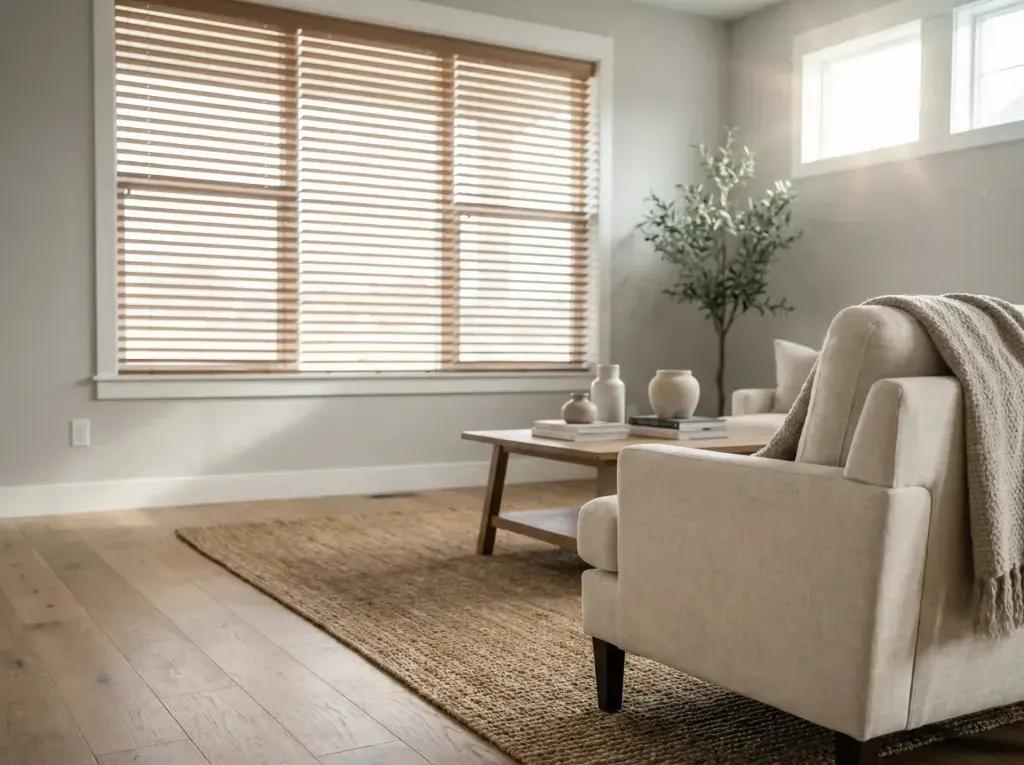
A house full of working blinds doesn't feel like a problem, which is exactly why the cord question tends to get overlooked until there's a toddler pulling on one. The fixes here range from free to a full afternoon project, and most homes need a mix of both.
Why a Cord Is More Dangerous Than It Looks
Most of the corded blinds still hanging in older homes were installed before cordless was the standard option, which means the hazard isn't a design flaw so much as a product that simply predates current expectations. The loop that forms on a continuous-loop cord is the specific shape that catches, and it's the same mechanism whether the blind is five years old or twenty.
The reason this keeps mattering in Westfield homes with kids is turnover. A family moves into a house with blinds already installed, the blinds still work fine for light control, and nobody thinks to check what kind of cord mechanism came with the house until there's a toddler in it.
A quick walk-through room by room in a Westfield home is usually enough to spot the pattern. Bedrooms and playrooms tend to have the oldest, most-used blinds, since those are the rooms where cords get pulled on daily, while a formal living room's blinds often look almost untouched because nobody spends enough time in there to wear on them.
How Cordless Lift Systems Actually Work
For a nursery, cordless product means a spring clutch or spring motor inside the headrail holds the shade wherever it's left, with nothing hanging down to reach the crib rail. You operate it by hand on the bottom rail, which for most nursery windows only needs adjusting once or twice a day anyway.
Cellular shades are a common nursery pick because the cordless mechanism pairs well with the room's other job, cutting down on light and street noise. Roller shades work the same way and mount flatter to the frame, which matters in a smaller room where you don't want the headrail eating into limited wall space above the window.
For a nursery specifically, a light-filtering or room-darkening cellular fabric is worth the extra look, since the same cordless spring mechanism that makes it safe also tends to hold its position more reliably at a partial height, which matters for a room where naptime and overnight settings are two different things.
Cords, Cribs, and Furniture Placement
Furniture placement matters as much as the blind itself. A crib or a glider positioned under or next to a window puts a cord within reach even when it's tucked up high, because a climbing two-year-old adds well over a foot of reach nobody planned for. The safest layout keeps climbable furniture off the window wall entirely, not just turned away from the cord.
Playrooms get overlooked the same way. A toy bin or a play kitchen shoved under a window in a Westfield playroom turns into a step stool the first time a kid wants to see outside. If a corded blind is already in that room and swapping it isn't in this month's budget, moving the furniture away from the window wall buys real safety without spending anything.
What Cordless Really Costs
As a national range, stock cordless cellular and roller shades run roughly $60 to $250 a window, close to what corded versions of the same product cost now that manufacturers have largely stopped charging a real premium for the safer mechanism. Custom cordless, where you're picking fabric and color to an exact mount, moves up to about $200 to $600 a window installed, again as a national range and not a local quote.
Motorization adds another $100 to $300 a window on top of that as a national range, and it's the one upgrade that solves the cord question and the reach question at the same time. A Westfield household ordering for several rooms at once usually finds it cheaper per window to standardize on one cordless product line than to mix brands, since setup and minimums get spread across more units.
None of these figures include a whole-house discount, which most installers offer once you're past a handful of windows, so a full order across several rooms often lands nearer the lower end of these ranges per window than a single-window quote would suggest.
A nursery or playroom doesn't need every window in the house redone at once, just the ones where a kid actually spends time. Westfield Window Treatments offers a free in-home measure focused on those rooms first, with cordless options sized and priced before the crib even arrives.
Making the Blinds You Already Own Safer
A blind advertised years ago as "safety cord" or "child-safe" isn't automatically the same as cordless, and it's worth checking which category an existing blind actually falls into before assuming it's fine. Some older safety cord designs used a tension device built into the cord itself, which helps but isn't foolproof if the tension weakens over time or the device gets unhooked and never reattached.
If you're not sure what's on your windows now, a quick look at the bottom of the cord tells you a lot. A loop that opens when you pull it apart is a genuine hazard. A cord that's fixed to a wall anchor or wound onto a cleat and stays taut is a safer interim setup, though it's still not the same guarantee as a cordless headrail.
Frequently Asked Questions
What's the difference between 'cordless' and 'child-safe' on a product label?
Cordless means there's no cord operating the lift function at all, full stop. Child-safe is a looser term that sometimes describes a product with a tension device or a shortened cord rather than one with no cord present. The two aren't interchangeable, and a product labeled child-safe can still have a cord that needs careful placement and furniture rules around it, where a genuinely cordless product removes that variable entirely.
Are motorized shades actually cordless, or is there still a cord somewhere?
A properly installed motorized shade has no external lift cord for a kid to reach, since the motor handles lift and the control is a wall switch or an app instead of a physical cord attached to the shade. There can still be a power cord for a plug-in motor, which matters for placement near an outlet, but that's a different kind of cord than the lift cords this issue is actually about, and it's typically routed well away from where a kid would stand.
Is the WCMA safety standard something the company is certified in?
No, and it's worth being clear about what that standard actually covers. ANSI/WCMA A100.1-2022 is a product standard that manufacturers build window coverings to, setting rules for cord length, breakaway tension devices, warning labels, and which stock products have to ship cordless. It's not a certification a company holds, it's a spec the product itself either meets or doesn't, and it's one of the reasons stock cordless product has become so much more common on shelves in recent years.
 Blind Repair in Westfield: What Actually Breaks and Why
 Do You Need Blackout, or Will Room Darkening Get the Job Done
 Do Your Westfield Windows Need Inside Mount or Outside Mount Blinds?