Cleaning Wood Blinds Without Ruining the Finish

Every material on a window wants a slightly different cleaning approach, fabric handled nothing like wood or aluminum, and using the wrong one is how a lot of Westfield homeowners end up with a dull finish or a stretched-out fabric shade they did not need to have.
Routine Dusting for Every Kind of Covering
Kitchens collect grease-tinged dust near the stove, which turns into a sticky film faster than dust anywhere else in a Westfield house, so a kitchen shade or blind genuinely needs more frequent attention than one in a formal living room that rarely gets touched.
Rooms with ceiling fans or an HVAC vent blowing directly at a window build up dust faster too, since moving air constantly pushes particles onto the nearest flat surface, and slatted blinds catch a surprising amount of it on the top edge of every slat.
A guest bedroom or a formal dining room that only sees occasional use can go longer between dustings, monthly is usually fine, while a kitchen or a sunroom with a lot of daily traffic benefits from a quick weekly pass instead.
Handling Stains and Spots Without Making Them Worse
Blot a fresh spill, do not rub it. Rubbing pushes whatever spilled deeper into the fabric and spreads it wider than the original spot, which is how a small stain turns into a bigger cleaning job.
Skip bleach and skip ammonia-based cleaners on fabric entirely. Bleach can discolor even fabric that looks white, and ammonia can react badly with certain dyes and coatings. Neither belongs anywhere near a custom fabric shade or drapery panel.
For a grease or food stain, a little cornstarch worked gently into the spot and left to sit before brushing away, followed by a mild soap and cold water, handles most of what actually shows up on a Westfield kitchen shade. Test it on a hidden area first regardless of how confident the method seems.
Caring for Cords and Motors
The mistake we see most with cords in Westfield homes is letting a cord lock slip for months without addressing it, propping the shade with something instead of having the lock serviced. What starts as a small mechanical wear issue turns into a shade that will not hold any position at all.
Another one: forcing a cordless shade that has started binding. That resistance is usually dust or debris in the track, or a worn clutch, the small drum a coiled spring winds around, and forcing it past that resistance is how a minor service call turns into a full mechanism replacement.
We also see safety devices, cord cleats and tension mounts, removed and never reinstalled after a repaint or a remodel. That is not just a cosmetic gap, an exposed cord loop is a real hazard, especially with kids or pets in the house.
If a window treatment in your home already looks tired despite regular care, or you are not sure what a specific fabric or finish can handle, it is worth asking rather than guessing. A free in-home measure is also a good time to have someone look at what you already own.
Cleaning Wood and Aluminum Blinds
Aluminum mini blinds are the cheapest to maintain long-term in a Westfield home, since they can handle a real wash without worrying about warping or finish damage, and a full soak in a tub with mild soap resets them completely if they have gotten heavily dusty.
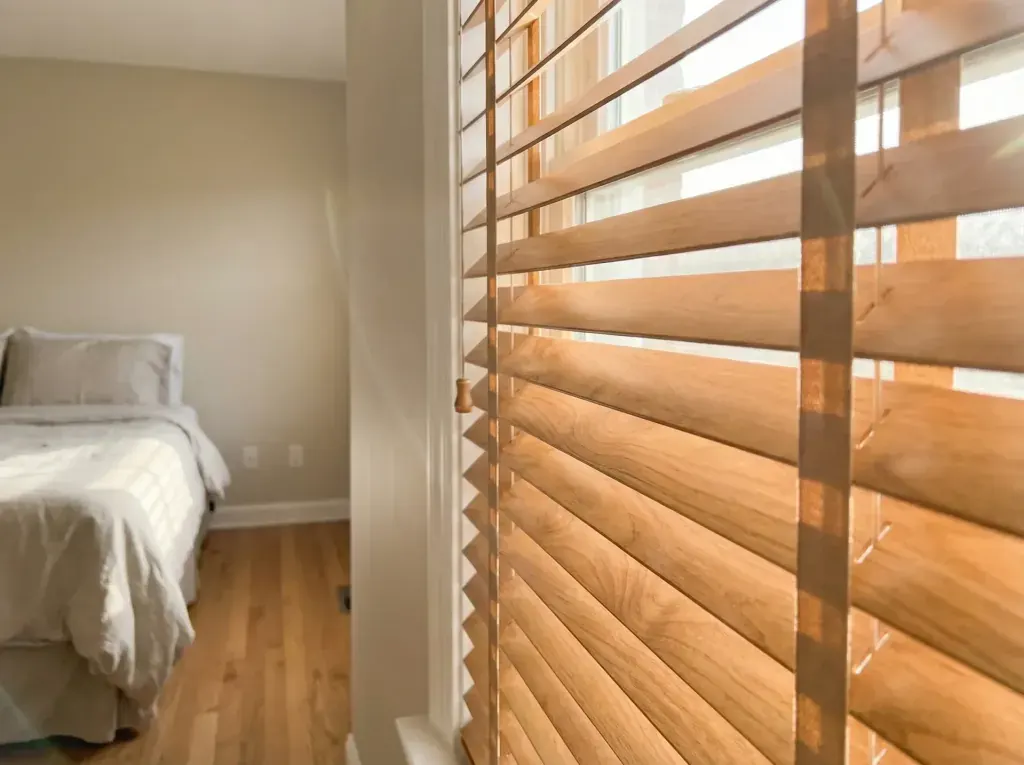
Real wood costs more upfront and it costs more in care too, since it cannot be washed the way aluminum can. A damp cloth is about the limit, and pushing past that risks a repair or a refinish down the road that costs far more than the dusting would have.
Faux wood sits in between. It handles a damp cloth and mild soap without the warping risk of real wood, which is part of why it holds up well in humid rooms where real wood would be a harder sell over the long run.
Cleaning Fabric Shades and Drapery
Ask whether a specific fabric is spot-clean only or whether it has a dry-clean recommendation on the care tag, since that changes what a Westfield homeowner should even attempt at home. A lot of custom fabric does not come with a tag at all, so this is worth asking about at the time of order.
Ask what the lining is made of before using any real moisture near it, since a blackout lining behaves differently than a plain sateen one and some can be damaged by the same treatment that is perfectly safe on the face fabric.
And ask what a professional cleaning actually involves, on-site or off-site, before assuming that is the only option for anything beyond a light spot. Plenty of routine grime comes out with a careful DIY spot treatment, and it is worth knowing where that line actually is.
Frequently Asked Questions
How often should I actually dust my blinds?
A light pass every week or two keeps most rooms in good shape. High-traffic rooms, a kitchen or a room near an HVAC vent, benefit from more frequent attention, while a rarely used guest room or formal dining room can usually go longer between dustings without it becoming a real cleaning job.
Do faux wood blinds need different care than real wood?
Yes. Faux wood is usually a PVC or composite material that handles a damp cloth and mild soap without much risk. Real wood cannot take that same treatment, since moisture warps the slats and can damage the finish permanently. They can look similar, but they do not clean the same way.
Should I worry about my shade's cords with kids or pets in the house?
Yes, that is worth addressing directly. Any exposed cord loop is a real hazard, so cord cleats or tension devices should be mounted and actually used, not left loose. Cordless or motorized options remove the concern altogether, which is why many households with young kids move toward one of those instead.
 Blind Repair in Westfield: What Actually Breaks and Why
 Do You Need Blackout, or Will Room Darkening Get the Job Done
 Do Your Westfield Windows Need Inside Mount or Outside Mount Blinds?